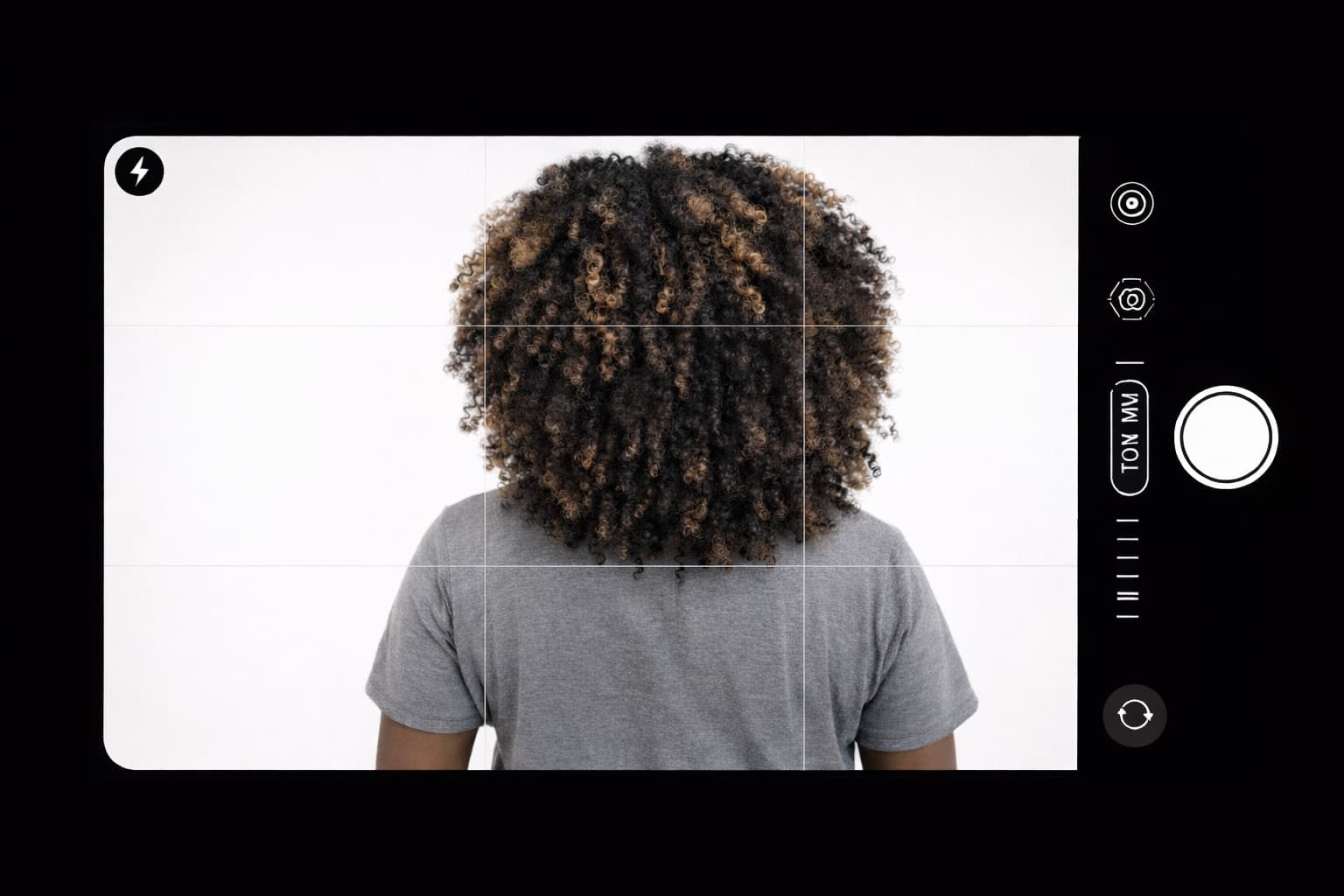
Crown Texture Scan

Crown Texture Scan

Hair Texture Test | Crown Texture Scan

Understanding your hair texture helps you choose the right styles, products, and routines. Use the Hair Wellness Lab Crown Texture Scan to better understand your curl pattern and hair characteristics.

Upgrade to Unlock
Natural lightClear patternNo filtersMinimal obstruction

A better photo gives a more refined crown read.

Hair Education

What Hair Texture Means

Curl Pattern

Curl pattern describes the shape your hair naturally forms — from straight and wavy to coily and tightly coiled. It's typically classified on a scale from 1 (straight) through 4 (tightly coiled), with letter subcategories (a, b, c) that describe how closely the curls are wound. Most people have more than one pattern across different sections of their head.

Strand Structure

Strand structure refers to the diameter and physical shape of individual hair strands. Fine strands are smaller in diameter and more delicate — they can be overwhelmed by heavy products. Coarse strands are thicker and stronger but may need more moisture and heat to penetrate. Medium strands fall in between and tend to be the most versatile.

How Texture Affects Styling

Texture dictates how your hair responds to manipulation. Tighter curl patterns tend to be more fragile at points of tension — such as the curl tips — and benefit from styles that minimize pulling. Looser patterns may have less defined shrinkage but can still be vulnerable to frizz and moisture loss. Understanding your texture helps you choose techniques and tools that work with your hair's natural behavior.

Why Textures Respond Differently to Products

The structure of each curl type affects how products penetrate and coat the hair shaft. High-porosity hair absorbs products quickly but loses moisture just as fast. Low-porosity hair resists absorption and benefits from heat-assisted conditioning. Coarser strands need heavier butters and oils to seal the cuticle, while fine strands can be weighed down by those same products. Matching your product weight to your texture is foundational to a routine that actually works.

Why Understanding Your Hair Texture Matters

Choosing the right styles

Not every style works for every texture. A style that thrives on fine 3c curls may cause tension and breakage on dense 4c coils. When you know your texture, you can choose styles that suit your strand structure — rather than fighting it.

Reducing breakage

Breakage is often the result of mismatched care — techniques that are too rough for fine strands, or manipulation that the curl pattern can't withstand. Texture awareness helps you identify where your hair is most vulnerable and adjust your handling accordingly.

Building a better moisture routine

Moisture retention varies dramatically by texture. Understanding your hair texture allows you to identify whether you need lightweight humectants, protein-moisture balance, or deeper conditioning — and how frequently each type of treatment should be applied.

Improving overall hair health

Hair health is cumulative. When your care practices align with your actual texture — the products you use, the way you detangle, the frequency of heat or manipulation — the result is stronger strands, more retained length, and less frustration over time.

How the Crown Texture Scan Works

The Crown Texture Scan combines a photo of your hair with a short set of questions about your characteristics — shrinkage, pattern variation, strand thickness, and current challenges — to build a personalized texture profile. You receive insights about your likely curl pattern range, density observations, and care guidance tailored to how your hair actually behaves.

01

Upload a photo

Share a clear image of your hair in natural light. The cleaner and more natural the photo, the more refined your crown read will be.

02

Answer a few questions

Describe your shrinkage, pattern variation, strand thickness, and your biggest current hair challenge. These responses add precision to your scan.

03

Receive your texture profile

The scan returns your estimated curl pattern range, density observations, and porosity signals — all based on your specific photo and responses.

04

Get personalized care guidance

Your results include practical guidance on products, routines, and styling approaches that align with your actual texture.

Common Questions

Hair Texture — Answered

What is my hair texture?

Your hair texture is a combination of your curl pattern, strand diameter, and how your hair responds to moisture and manipulation. It describes the natural shape and structure of your hair — not just whether it's curly or straight. Texture is individual, and many people have more than one texture across different sections of their head. The Crown Texture Scan is designed to help you identify your specific texture profile based on your photo and responses.

What are the different curl patterns?

Curl patterns are generally classified on a numbered scale from 1 to 4, with letter subcategories. Type 1 is straight with little to no curl. Type 2 is wavy — ranging from loose, beachy waves (2a) to more defined, frizz-prone waves (2c). Type 3 includes springy, well-defined curls from loose (3a) to tight corkscrew (3c). Type 4 covers coily and tightly coiled patterns, from soft coils (4a) to very tight, dense, z-shaped patterns (4c). Most people with natural or textured hair fall somewhere in the Type 3 to 4 range and often have a mix of subcategories.

Can hair texture change?

Yes. Hair texture can change over time due to several factors including hormonal shifts, pregnancy, medications, significant stress, nutritional changes, and the cumulative effects of heat or chemical treatments. Damage to the hair shaft or follicle can alter the way new growth emerges. In some cases, texture changes are temporary — for example, after postpartum shedding. In others, particularly after repeated chemical processing or heat damage, they may be more lasting.

Is hair texture the same as hair type?

Not exactly. Hair type is a broader term that often refers to curl pattern classification (the 1–4 scale). Hair texture is more specific and includes strand thickness (fine, medium, coarse), density (how many strands per square inch), porosity (how well the hair absorbs and retains moisture), and elasticity (how much the hair stretches before breaking). Understanding your full texture — not just your curl type — gives you a much more complete picture of how to care for your hair.

Continue Your Crown Journey

Related Hair Wellness Tools

MediumBased on some relevant inputs

Generated from your photo and self-reported hair details

Hair Wellness Lab provides educational and wellness-based insights only. This platform does not diagnose or treat medical conditions. Please consult a licensed professional for medical concerns.